List of Loan Apps Approved by CBN in Nigeria (2026)
9 mins read

The short answer
There is no CBN list of approved loan apps. The Central Bank of Nigeria licenses institutions, such as microfinance banks and finance companies. It does not approve or publish a list of loan apps.
The list almost everyone is searching for is published by a different agency: the Federal Competition and Consumer Protection Commission (FCCPC). You can view it at fccpc.gov.ng, on the page for registration of digital money lenders.
So when a website promises you "the CBN list of loan apps," it is either repeating a common mistake or copying someone who did. This guide explains who regulates what, how to read the official register, and how to check any loan app yourself in about five minutes.
Why the confusion exists
Both bodies are involved in digital lending, but at different levels.
Think of it like a restaurant. The CBN is like the authority that licenses a company to run a food business at all: it checks the money, the accounts and whether the business is sound enough to hold your deposits. The FCCPC is like the inspector who checks how the restaurant treats customers: whether it is honest about prices, and whether it behaves badly when someone complains.
A loan app can pass the second check without ever facing the first. That difference matters more than most borrowers realise, and we come back to it below.
Who regulates what
Body | What it does | What it publishes |
|---|---|---|
FCCPC | Registers and approves digital lenders. Policies on how they treat borrowers and recover debt | The register of approved digital money lenders. This is the list people mean. |
CBN | Licenses and supervises financial institutions: microfinance banks, finance companies, payment providers. | Lists of licensed institutions, such as licensed microfinance banks. |
NDPC | Enforces the Nigeria Data Protection Act. Handles apps that misuse your contacts, photos or messages. | Registered data controllers, plus enforcement decisions. |
SEC | Regulates investment and securities products only. | Not relevant to ordinary loan apps. |
There is one more layer. Google Play requires personal loan apps in Nigeria to show a verifiable FCCPC approval letter before they can be listed, and bans loan apps from accessing your contacts and photos.
This is why some illegal apps now spread through APK download links instead of the official app stores. If you cannot find an app on Google Play or the App Store, it's a warning sign, not a shortcut.
The categories on the official register
The register does not simply say approved or not approved. Lenders sit in different categories, and the category tells you a lot.
Category | What It Means |
|---|---|
Full approval | The lender has met the FCCPC requirements and is cleared to operate. |
Conditional approval | Allowed to operate while finishing outstanding paperwork. Legal, but not fully cleared. |
Waiver (CBN-licensed) | The company already holds a CBN licence, so the CBN supervises it directly. It gets a formal waiver instead of registering twice. |
Watchlist | Under active supervision, usually after complaints. |
Delisted or removed | No longer approved. Avoid completely. |
The waiver category is the one most borrowers have never heard of, and the one worth understanding. It covers lenders already licensed by the CBN as banks or microfinance banks. They are not lightly regulated: the banking regulator regulates them more heavily, which is why they do not go through ordinary registration a second time.
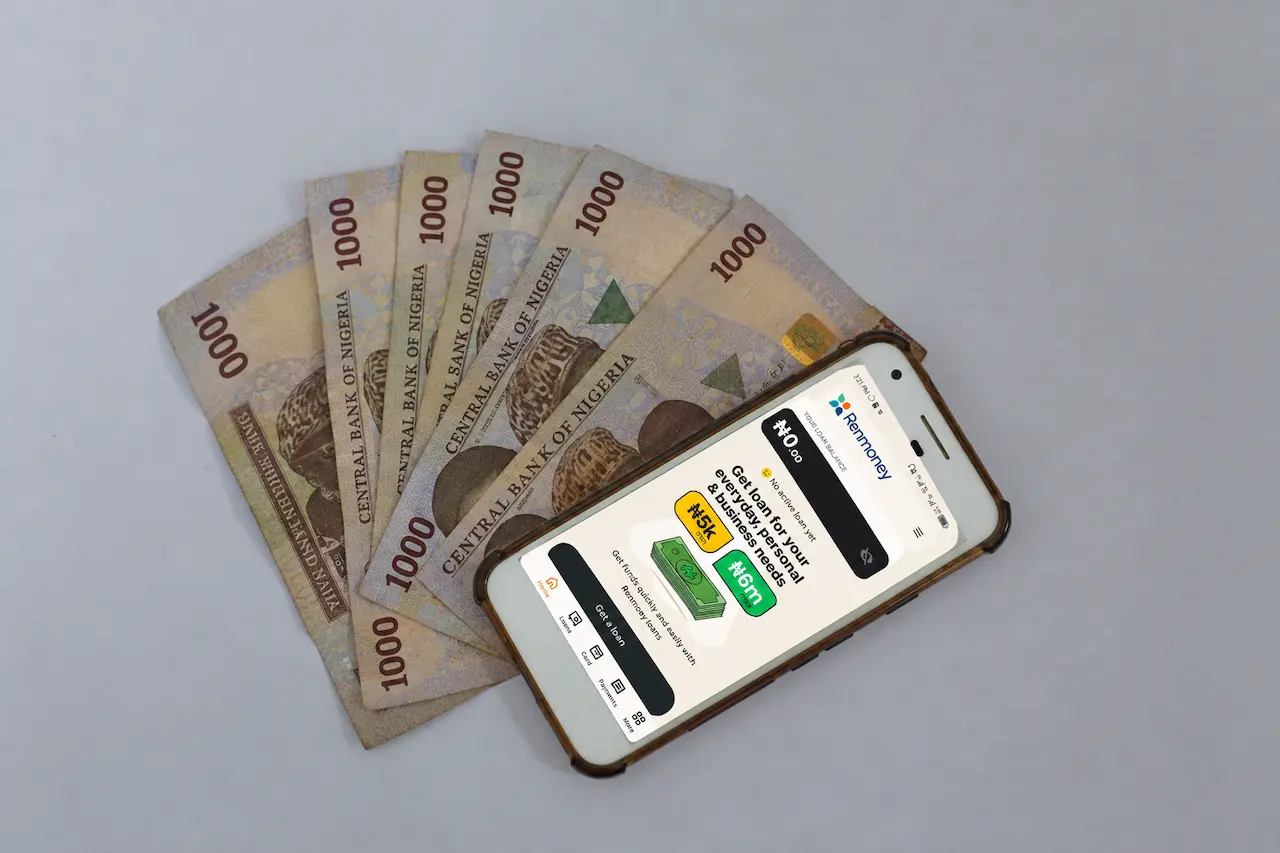
Renmoney sits in this group. Renmoney is a licensed microfinance bank regulated by the Central Bank of Nigeria, and savings are NDIC-insured.
How many loan apps are approved in Nigeria?
Be careful with what you read online here, because the numbers move and some widely quoted ones are wrong.
The most reliable public figure: as reported in January 2026, 457 of 521 registered digital lenders had full approval, with a further 35 holding conditional approval. Separately, a number of CBN-licensed lenders hold waivers. Counting every app these companies operate, the FCCPC says it monitors more than 1,000 loan apps.
A figure of "505 approved loan apps" circulated widely in June 2026. The FCCPC publicly denied it, saying the report did not reflect its position because a court order at the time had paused new approvals. That order was later discharged. In July 2026, the Federal High Court in Lagos dismissed the industry challenge; the FCCPC confirmed its 2025 lending regulations were fully operational, and approvals resumed. An appeal was filed and remained pending as at September 2026.
One more thing when you count: the live register lists companies, and one company can run several apps. That is why a figure in a news report rarely matches the number of rows on the register. Neither is wrong; they count different things.
The practical takeaway: do not trust any number, including ours, as permanently current. Check the app you care about on the register itself. That answer is always correct on the day you look.
How to check if a loan app is approved: five steps
Check the FCCPC register. Go to fccpc.gov.ng and open the page for registration of digital money lenders. Search the company name, not just the app name, since one company may run several apps. Confirm it sits under full approval, not watchlist or delisted.
If the lender calls itself a bank, check the CBN. Visit cbn.gov.ng and look at the list of licensed institutions, for example licensed microfinance banks. If a company claims to be a microfinance bank and is not on that list, stop there.
If it takes deposits or savings, check the NDIC. The NDIC publishes a list of insured institutions at ndic.gov.ng. This tells you whether your savings are protected if something goes wrong with the institution.
Check that the company exists. Use the Corporate Affairs Commission company search to confirm a real registered business sits behind the app.
Check the app store listing. The developer name should match the licensed company, and look at the permissions requested. A legitimate lender does not need your contacts, your photos or your messages. Compare that with how a regulated lender handles your data and the independently certified security standards it has to meet.
If an app fails step one, nothing in the remaining steps rescues it. Do this before you find your BVN and hand it over, because your BVN is the one detail every lender asks for first.
Red flags of an illegal loan app
It is not on the FCCPC register, or it appears on the watchlist or delisted list.
It asks for access to your contacts, photos or text messages when you install it.
It is shared as an APK download link instead of through Google Play or the App Store.
There is no company name, office address or CAC registration you can verify.
There is no privacy policy and no named data protection officer.
It asks you to pay a fee before any money is disbursed.
The charges are unclear, or the terms change after you have accepted them.
What the rules now require of lenders
In 2025, the FCCPC replaced its earlier interim framework with a full set of rules for digital and online consumer lending. They carried a compliance deadline of 5 January 2026, and enforcement, including removing non-compliant operators from the register, began later that month.
Under those rules, an approved lender must:
Register with the FCCPC and pay the approval fee, unless already licensed under banking law, in which case it must obtain a formal waiver.
Disclose its rates and charges clearly on every platform where it offers loans.
Comply with the Nigeria Data Protection Act.
Follow ethical debt recovery rules. It must not contact the people in your phone or shame you publicly.
Provide a complaints channel, and give you a statement of your loan account when you ask.
Report credit data to licensed credit bureaus.
The penalties are serious. A company in breach faces up to ₦100 million or one per cent of its previous year’s turnover; individuals face up to ₦50 million, and directors can be disqualified for up to five years.
So if a loan app is messaging your family, colleagues or church group about your debt, it is not being tough. It is breaking the law, and you have somewhere to report it.
Approved is the floor, not the ceiling
FCCPC approval means a lender has registered and agreed to conduct rules. It does not mean anyone is checking that the lender is financially sound, and it carries no protection for money you keep with them.
A CBN licence is a different level. A licensed microfinance bank must:
Meet minimum capital requirements set by the CBN.
Submit to ongoing prudential supervision, with regular reporting and examination.
Insure customer deposits through the NDIC. Coverage for microfinance bank depositors was raised to ₦2 million per depositor in 2024.
Give customers access to the CBN’s consumer protection escalation route when a complaint is unresolved.
If you only borrow small amounts and repay quickly, this may not affect you much. If you also save with the same provider, or you are choosing an institution for a longer relationship, it matters a great deal. That is the tier Renmoney operates in: a CBN-licensed microfinance bank offering loans and NDIC-insured savings rather than a lending app alone.
What to do if a loan app is harassing you
Gather evidence of the harassment. Screenshot the messages, note the app name, the company name and the numbers used. Then report it.
FCCPC (harassment, unfair terms, illegal lending): email contact@fccpc.gov.ng, or call 0805 600 2020 or 0805 600 3030. You can also file a complaint through the portal on fccpc.gov.ng, naming the app.
NDPC (misuse of your contacts, photos or personal data): email info@ndpc.gov.ng, or use the complaint channels on ndpc.gov.ng.
CBN (a licensed bank or microfinance bank): complain to the institution first. If it is not resolved, escalate to the Consumer Protection Department at cpd@cbn.gov.ng. If Renmoney is the lender, start with our complaints channel.
Nigeria Police Cybercrime Unit: for threats, extortion or defamation. Reporting it is free.
Frequently asked questions
Is there an official CBN list of approved loan apps?
No. The CBN licenses financial institutions such as microfinance banks and finance companies, and publishes lists of those institutions. It does not approve or publish a list of loan apps. The official register of approved digital lenders is published by the FCCPC at fccpc.gov.ng.
Where can I see the official list of approved loan apps in Nigeria?
On the FCCPC website, fccpc.gov.ng, on the page covering the registration of digital money lenders. It shows approved companies along with those on the watchlist and those delisted. It is updated periodically rather than on a fixed schedule.
How many loan apps are approved in Nigeria?
As reported in January 2026, 457 of 521 registered digital lenders had full approval and 35 had conditional approval. The FCCPC says it monitors more than 1,000 loan apps in total, because one approved company can operate several apps. These figures change, so check the register for the current position.
Is the figure of 505 approved loan apps correct?
The FCCPC publicly denied a June 2026 report that it had approved 48 more companies to reach 505, explaining that a court order at the time had paused new approvals. Treat that figure with caution and rely on the register instead.
What is the difference between CBN-licensed and FCCPC-approved?
FCCPC approval is a registration and conduct regime covering how a lender treats borrowers. A CBN licence is prudential regulation: it covers whether the institution is financially sound, sets minimum capital, and brings NDIC deposit insurance. CBN-licensed lenders receive a waiver from ordinary FCCPC registration because the banking regulator already supervises them.
Is Renmoney approved?
Renmoney is a licensed microfinance bank regulated by the Central Bank of Nigeria, and savings are insured by the NDIC. That places it in the CBN-licensed tier rather than among lenders whose only clearance is FCCPC registration. You can read more about Renmoney or check the frequently asked questions.How do I check if a loan app is legal?
Search the operating company on the FCCPC register at fccpc.gov.ng and confirm it appears under full approval. If it calls itself a bank, also check the CBN list of licensed institutions. Then confirm the company on the CAC register and check that the app store developer name matches.What should I do if a loan app contacts my family or friends about my debt?
That breaches the rules on ethical debt recovery. Take screenshots, then report the app to the FCCPC at contact@fccpc.gov.ng or on 0805 600 2020 or 0805 600 3030, and report the data misuse to the NDPC at info@ndpc.gov.ng.
Keep reading
How to check your BVN in Nigeria — the number every lender asks for first.
How to get a BVN in Nigeria — if you do not have one yet.
Loan requirements in Nigeria: what lenders check — what happens after you pick a licensed lender.
School fees loans in Nigeria — borrowing for tuition without using an unlicensed app.
How to budget in Nigeria — planning so you borrow less in the first place.
Apply for a loan with Renmoney — a CBN-licensed microfinance bank.